
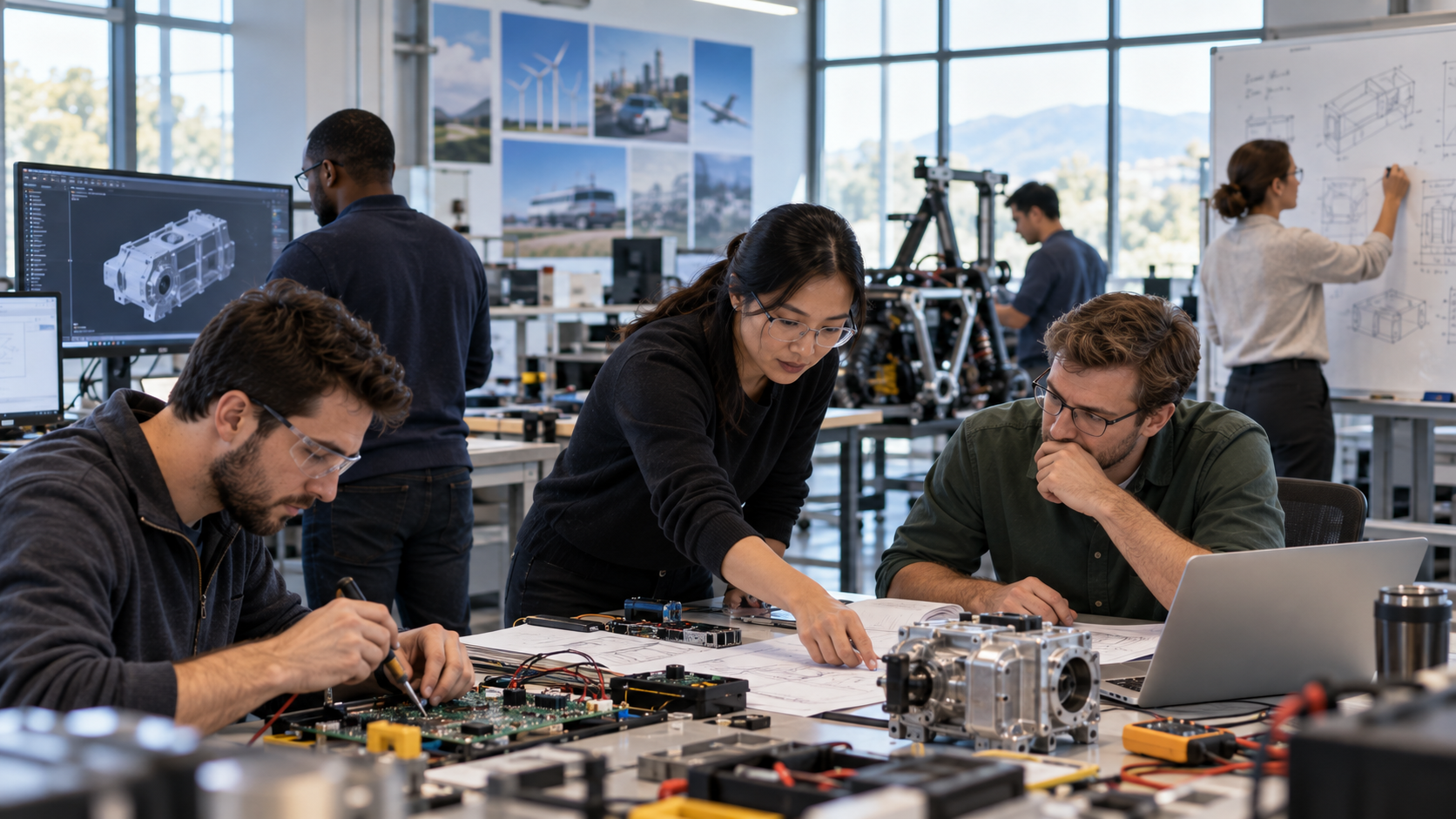
Emerging technologies often attract attention because of the innovation itself—a new software platform, advanced mobility technology, medical device, intelligent system or breakthrough product.
Behind nearly every successful technology, however, is something less visible: the people who develop it, validate it, integrate it, manufacture it and ultimately bring it to market.
As technologies evolve, so do the skills required to move them forward.
Innovation Requires More Than One Kind of Talent
Technology development is increasingly multidisciplinary.
A connected product, for example, may require mechanical and electrical engineering, embedded software, data expertise, testing, cybersecurity, manufacturing knowledge and program management. Bringing that product into the market can add requirements for business development, regulatory expertise, operations and customer support.
Few organizations have every capability they need internally at every stage.
The challenge becomes assembling the right expertise when it is needed.
Talent Needs Change as Technology Develops
The people required during early development may be very different from those needed as a technology approaches commercialization.
Early stages may depend heavily on researchers, product developers and specialized technical experts. Later stages can require validation engineers, manufacturing specialists, software developers, program managers and professionals who understand customers and markets.
As the opportunity grows, organizations may also need additional leadership, operational and commercial capability.
The talent strategy must evolve with the technology.
Specialized Expertise Can Accelerate Progress
Some capabilities are difficult to build internally, particularly when the need is highly specialized or tied to a particular phase of development.
Experienced professionals can bring knowledge gained from similar technologies, products and industry programs. That experience can help teams solve problems faster, recognize risks earlier and avoid rebuilding expertise that already exists elsewhere.
Access to specialized talent can therefore become an important part of both technology development and commercialization strategy.
Established Companies Face the Same Challenge
Talent behind emerging technology is not only a startup issue.
Established organizations developing new products, adopting AI, building software-defined systems, introducing automation or pursuing other innovation programs often encounter the same skills gap.
Existing teams may be highly capable but already committed to current products and programs. New initiatives can require expertise that the organization has never needed before.
Adding specialized professionals can expand capability without requiring every emerging skill to become a permanent internal function.
Industry Experience Matters Too
Technical capability is essential, but experience within an industry can add another dimension.
Professionals who understand established products, customers, development processes, regulations, manufacturing environments and supplier ecosystems can help connect new technologies with the realities of commercial application.
This becomes particularly valuable when technologies cross traditional boundaries—for example, when software, electronics and artificial intelligence become increasingly integrated into physical products and industrial systems.
Connecting Talent With Opportunity
Technology and talent ultimately develop together.
As innovation creates new capabilities, organizations need people with new combinations of skills. At the same time, experienced professionals can help emerging technologies find applications, overcome development challenges and move toward commercial use.
That relationship is why talent should not be viewed simply as a hiring requirement.
The right people can become part of the pathway that moves technology from potential to opportunity.